Blog · Florida Flooring Guide
Best Flooring for Florida Humidity: What Actually Survives Cape Coral Summers
If you’ve owned a Cape Coral home for more than one summer, you already know what humidity does to the wrong floor. Solid hardwood cups. Laminate swells along every seam. Cheap vinyl bubbles. The flooring industry sells the same products everywhere in the US — but Southwest Florida punishes 60% of them within 3 years.
Here’s the deal: the right flooring for Florida humidity isn’t a single material — it’s a short list of materials engineered for moisture, plus the right install practices (sub-floor moisture testing, acclimation, vapor barriers). We’ve been installing flooring in Fort Myers, Naples, Cape Coral, and Bonita Springs since 2012, and we’ll walk you through what actually survives.
What’s the best flooring for Florida humidity?
The best flooring for Florida humidity is luxury vinyl plank (LVP), porcelain tile, or engineered hardwood with a 100% waterproof core. Solid hardwood and laminate can warp, cup, or swell in Cape Coral’s 70–90% summer humidity. LVP wins on price, waterproofing, and pet-friendliness; engineered wood wins on resale value; porcelain tile wins on hurricane recovery.
Why Florida humidity destroys solid hardwood and laminate
Solid hardwood is one continuous piece of natural wood. It expands and contracts along the grain as humidity changes — that’s normal. The problem in Cape Coral is the magnitude: indoor humidity here can swing from 50% in winter (A/C running) to 85% in summer if homes aren’t dehumidified consistently. That 35-point swing forces solid wood to expand more than nail spacing allows, and you get cupping (edges curl up) or gaps that don’t close even in winter.
Laminate has a different failure mode: its core is high-density fiberboard (HDF), which is essentially compressed sawdust + resin. The instant moisture reaches that core — through seams, through a pet accident, through hurricane intrusion — the HDF swells permanently. There’s no fix. The board has to come out.
The 3 materials that dominate flooring in SW Florida
1. Luxury Vinyl Plank (LVP) with WPC or SPC core
LVP is what we install most in Cape Coral homes — for good reason. It’s 100% waterproof, mimics hardwood visually well (especially at premium tiers), handles pet claws better than real wood, and costs roughly half what engineered hardwood costs installed. The two core types are Wood-Plastic Composite (WPC, softer underfoot, warmer) and Stone-Plastic Composite (SPC, harder, more dent-resistant). For most living areas in SW Florida, WPC is the better choice.
2. Porcelain tile
Porcelain is dense (water absorption under 0.5%), impervious to moisture, and survives hurricanes that flood your house. It’s the floor most appraisers love in Florida, and the floor most insurance adjusters approve quickly post-storm. The trade-off: cold underfoot, harder install, more expensive in materials (offset by long lifespan — a properly laid porcelain floor lasts 50+ years).
3. Engineered hardwood with waterproof core
Engineered hardwood is a real wood veneer (3–6mm) on top of a stable plywood core. The newest generations use waterproof cores (similar to LVP’s WPC) under that wood top layer — combining the look and resale value of real wood with the moisture resistance Florida demands. It’s our pick for clients who want hardwood appearance and resale value but can’t use solid wood. Learn more on our flooring installation page.

Which one wins on price, lifespan, and water?
Let’s break it down with a side-by-side based on real installs we’ve done in Cape Coral, Fort Myers, and Naples over the past 5 years.
| Factor | LVP | Porcelain Tile | Engineered Wood (waterproof) |
|---|---|---|---|
| 100% waterproof | Yes | Yes | Core yes, surface yes (with proper finish) |
| Realistic lifespan in FL | 15–25 years | 40–50+ years | 20–30 years |
| Pet-friendly | Excellent | Excellent (but slippery) | Good (top layer scratches) |
| Resale appeal | Mid | High | High |
| Hurricane recovery | Good (water-resistant) | Excellent (just dry and reseal grout) | Good if core is waterproof |
| Comfort underfoot | Warm, soft | Cold, hard | Warm, hard |
| Best for | Whole home, families with pets, budget | Hurricane-zone homes, formal living, kitchens | Resale-focused homes with humidity control |
What about the install? Acclimation, subfloor moisture, vapor barrier
The material is half the battle. The other half is the install — and in SW Florida, the install is where most floors fail. Look:
Acclimation matters more here than anywhere else
Every flooring product has an acclimation period — 48 to 72 hours minimum in the conditioned space before install. In FL, ignoring this is the #1 cause of cupping and gaps. The wood (or LVP, or engineered) needs to reach the humidity level it’ll live at year-round.
Sub-floor moisture testing
Concrete slabs in Cape Coral are nearly always damp. We test every job — if the slab reads over 4 lbs/1000 sqft per 24h moisture vapor emission, we install a vapor barrier underneath. No vapor barrier means moisture migrates up through the floor over months, eventually destroying it.
Vapor barrier & underlayment
The right underlayment makes the difference between a 20-year floor and a 5-year floor in SW Florida. We use a 6-mil polyethylene vapor barrier as the minimum for any concrete slab install, and step up for older homes where the slab moisture test fails.
Hurricane and flood recovery: what survives, what doesn’t
This isn’t hypothetical for SW Florida homeowners. Ian (2022), Helene/Milton (2024) — we’ve done dozens of post-storm flooring jobs. Here’s the 48-hour rule that decides whether your floor survives a flood:
- Porcelain tile: pumps out, dries, re-grout if needed. 90%+ recovery rate.
- LVP: if pulled up and dried within 24h, recoverable. If left wet 72+ hours, often pulls apart at seams — replace.
- Engineered hardwood (waterproof core): core survives, but top wood layer often warps. Roughly 50/50.
- Solid hardwood: rarely recoverable. Boards cup, gap, and mold underneath within 72h.
- Laminate: rarely recoverable. The HDF core swells permanently.
- Carpet: never recoverable after a flood. Mold within 48–72h. Tear it out.
Frequently asked questions
Common questions from Cape Coral and SW Florida homeowners researching flooring.
Can I install engineered hardwood in my Cape Coral kitchen?
Yes — if the engineered product has a waterproof core (WPC or SPC under the wood veneer) and you install with proper underlayment. Avoid older-generation engineered without waterproof core in kitchens.
What flooring survives best after a flood?
Porcelain tile by far. LVP recovers if dried fast (under 24 hours). Solid hardwood, laminate, and carpet almost never survive a flood event in Florida.
Why does my laminate floor keep swelling at the seams?
Laminate’s HDF core absorbs any moisture that reaches it — through pet accidents, spills, humidity over years, or sub-floor moisture. Once swollen, it can’t be reversed. Replace with LVP for the same look without the failure mode.
Do I need a vapor barrier under flooring in Cape Coral?
If you’re installing over a concrete slab in SW Florida — yes. Slabs here are nearly always damp. We test every install and apply a vapor barrier when moisture exceeds 4 lbs/1000 sqft/24h.
Is LVP good for homes with dogs?
LVP is one of the best flooring options for pets — waterproof, scratch-resistant, easy to clean, and warmer underfoot than tile. SPC core tiers are the most dent-resistant under heavy dogs.
What’s the lifespan of engineered hardwood in Florida?
20–30 years if installed with the right core (waterproof), the right underlayment, and proper humidity control year-round (45–55% indoor). Without humidity control, lifespan drops to 10–15 years.
Explore Our Services
- Flooring Installation
- Floor Refinishing
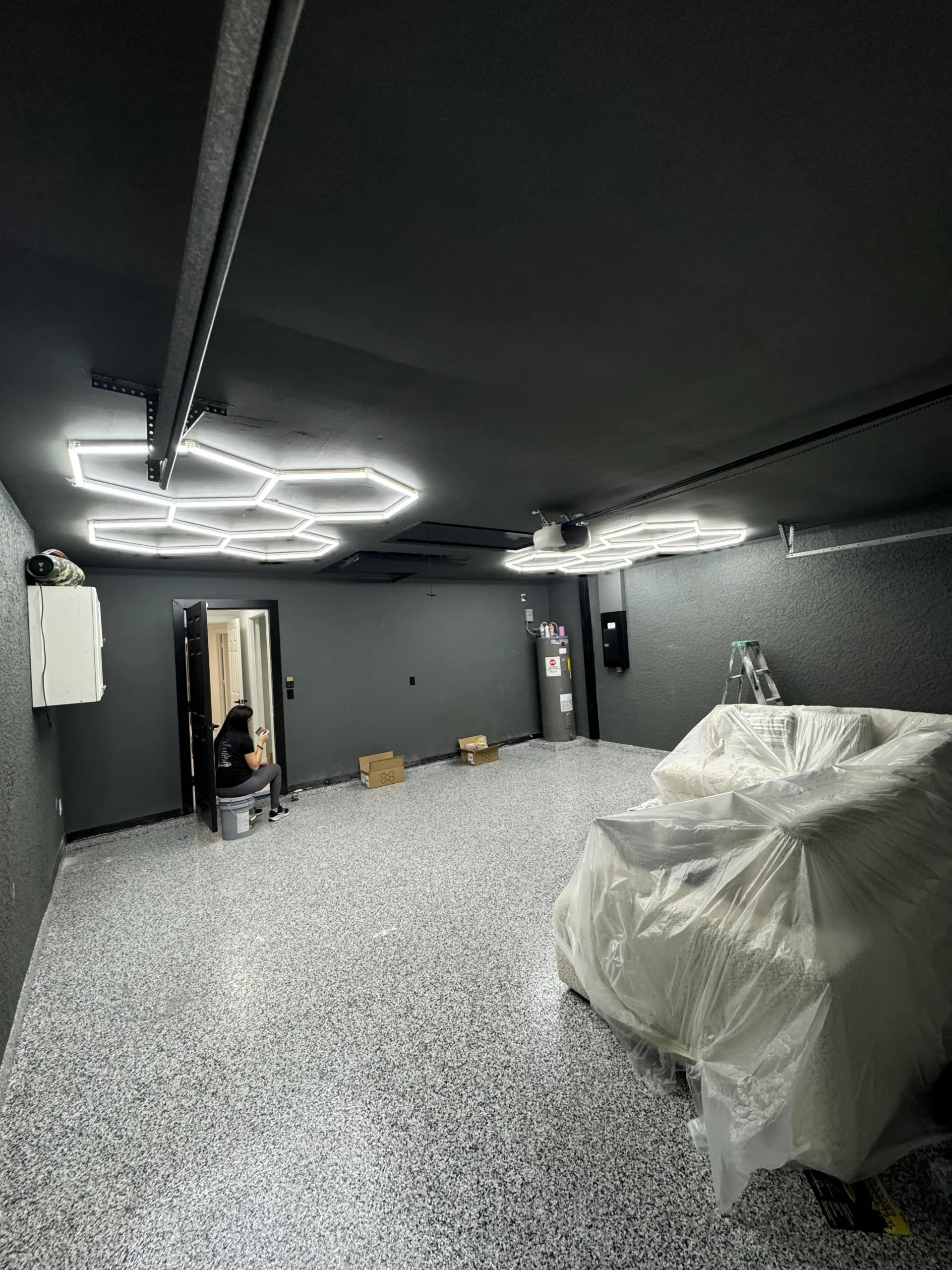
- Epoxy Flooring
- Fort Myers Flooring
- Naples Flooring
- Bonita Springs Flooring
Want a flooring quote that fits Cape Coral’s climate?
If you’re in Cape Coral, Fort Myers, Naples, or surrounding SW Florida, request a quote and we’ll walk your space, test sub-floor moisture, and recommend the material that fits your home, your humidity, and your timeline — not what a national chain’s catalog says.
Or call directly: +1 (855) 686-6174